
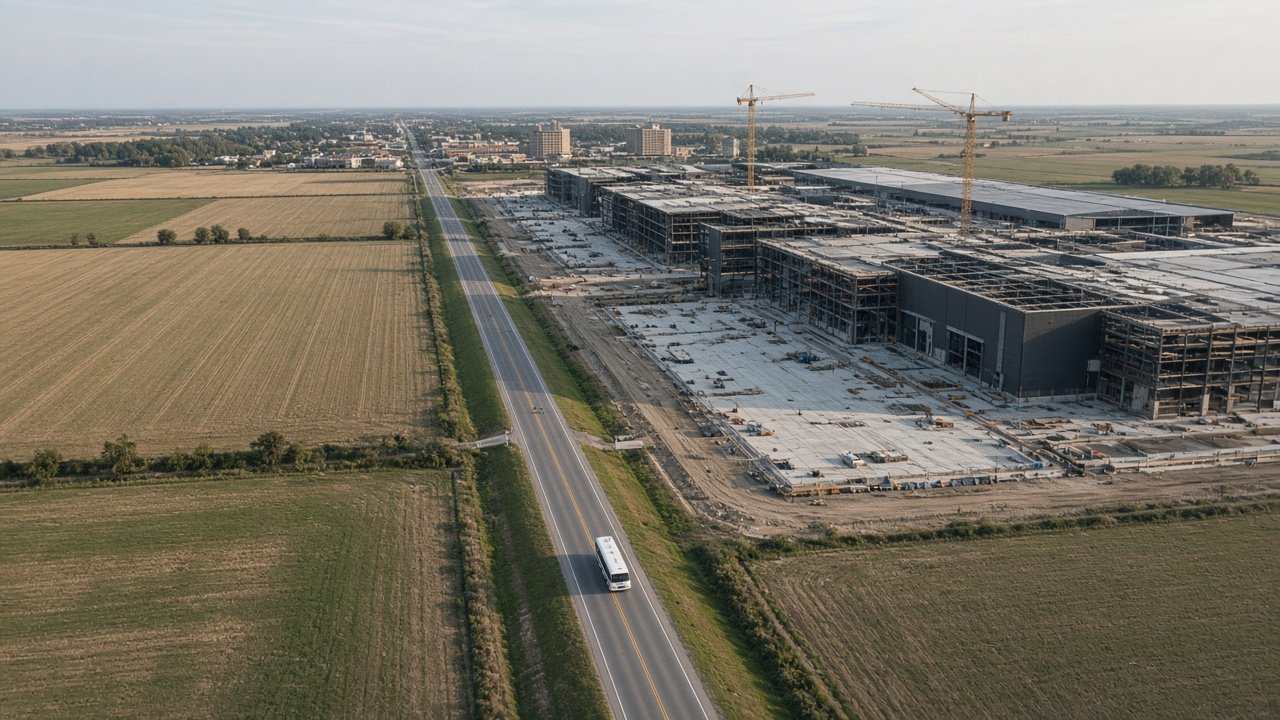
When a data center lands in a rural market, the housing math breaks fast: the local hotel count cannot absorb a mobilizing crew, and whatever inventory exists gets contracted by whoever moves first. The fix for lodging near rural data center construction is radius sourcing by drive time, spread across multiple properties, backed by shuttle logistics so crew drive time does not eat into shift time. You do this before the ramp, not during it, because blocks take weeks to assemble and crews mobilize in days.
Before you start scrambling to find crew rooms or pulling someone off-task to handle a search, contact Sagen to help you. Schedule a Call. Hotels pay Sagen's commission, so there's no cost to your project.
Why rural data center lodging runs out so fast
Rural submarkets rarely carry the room count a large construction crew needs. A single flagged hotel may have up to 80 rooms in its entire inventory, and may only be able to offer 40 to 50 rooms in the form of a group for an extended stay, based on how far in advance you book, so your peak headcount can exceed the combined inventory of every property within a comfortable commute. That gap is the whole problem.
Three dynamics make it worse:
- You are not the only project. Data center clusters attract related builds, substation and transmission work, and seasonal demand like harvest or hunting. When two project teams chase the same 40 rooms, the hotel wins and rates move up.
- Supply is inelastic. A rural town does not add hotels because your project arrived. The beds that exist are the beds you get, so the strategy is capturing and protecting them, not hoping for more.
- Timing favors the prepared. General managers contract the biggest, longest, most reliable blocks first. If you are still sketching headcount while a competitor has a signed agreement, you are buying leftovers at a worse rate.
The practical takeaway: treat lodging as a long-lead procurement item, on the same schedule discipline as major equipment. The sourcing question is not "what is in town" but "what is reachable."
Source by drive time, not by zip code
Rural sites almost never have enough rooms in the nearest town. So you widen the search in concentric drive-time bands and treat each band as a tradeoff between rate, availability, and daily commute cost.
Map your options in rings:
- 0 to 20 minutes: the premium tier. Lowest commute burden, highest competition, fills first. Lock what you can here for key personnel and early trades.
- 20 to 45 minutes: the workhorse tier. Usually where the real room count lives. Commute is still tolerable for most crews, especially with a shuttle.
- 45 to 75 minutes: the overflow tier. You accept this band for peak ramp, specialty trades, or short surges, not for the whole project if you can avoid it.
A few minutes on a map understates reality. What matters is drive time at shift-change hours on the actual roads crews will use, including two-lane highways, rail crossings, and weather exposure. Thirty miles on a rural highway is not thirty miles on an interstate. Build your rings on real travel time, then price the commute: every extra 20 minutes each way is paid or unpaid time that affects both cost and retention. See how crew housing quality affects skilled-trade retention for why that commute math is not just a line item.
Plan Housing Near Your Site
Send us three things: your site location, peak crew headcount, and mobilization date.
You get on the call: hotel inventory within driving range of the site, block options across multiple properties, and a phased plan for housing the crew through ramp and peak.
Want details for your project? Schedule a Call.
Shuttle logistics and the hotel-versus-alternative decision
Once your rooms sit 20 to 45 minutes out, transportation becomes part of the housing plan, not an afterthought. A coordinated shuttle from one or two hub hotels to the site does three things: it removes dozens of personal vehicles from a rural road and a tight site parking area, it keeps crew arrival predictable for shift start, and it lets you use farther, cheaper, more available rooms without pushing commute cost onto the worker.
Decide early whether hotels alone can carry your headcount or whether you need to blend in other housing types. In many rural data center builds, hotels are the right core for supervisors, early trades, and anyone on a shorter rotation, while longer stays and peak surges may call for other formats. Weigh the options in hotels vs. man camps vs. corporate apartments, then build the mix deliberately instead of defaulting to whatever filled up first.
A workable rural housing plan usually looks like this:
- Confirm peak headcount and the ramp curve by month.
- Map reachable inventory by drive-time ring and real road time.
- Lock hub-property blocks early with milestone-aware attrition and cancellation terms.
- Layer in overflow and alternative housing for peak only.
- Run shuttles from hubs so farther rooms stay viable.
- Consolidate folios and reconcile against one rate structure.
Schedule a Call About Your Site
Send your site location, peak crew headcount, and mobilization date, and you get a clear picture of hotel inventory within driving range, block options across multiple properties, and a phased plan to house the crew from ramp through peak. Crews mobilize faster than hotel blocks open up. Lock in inventory before the ramp. Hotels pay Sagen's commission, so there's no cost to your project.
When you schedule a call, you'll speak directly with a seasoned Sagen executive, not a junior business development rep, so you get real answers about your project from someone who has negotiated these contracts firsthand.
Frequently asked questions
How far from a rural data center site should we look for crew lodging?
Source in drive-time rings rather than fixed mileage. Aim to cover the core crew within 20 to 45 minutes of real travel time on the actual roads and shift-change hours, and reserve the 45-to-75-minute band for peak overflow and specialty trades. Rural highway miles take longer than they look on a map, so always price the commute against shift time and retention.
Why do hotels near rural construction projects fill up before we can book?
Rural supply is inelastic, so the few existing properties contract their largest, longest, most reliable blocks first. Competing projects, transmission and substation work, and seasonal demand chase the same limited rooms. Whoever signs first at the best terms wins, which is why lodging should be treated as a long-lead procurement item alongside major equipment.
What contract terms matter most in a construction room block?
Attrition and cancellation. Attrition sets how many contracted room nights you must pay for even if crew count flexes, so negotiate a block that steps with your schedule. Cancellation governs what you owe if a milestone slips or a phase ends early, so tie reductions to project milestones with reasonable notice windows instead of accepting a standard group template.
Should we use hotels, man camps, or corporate apartments for a rural data center build?
Usually a deliberate blend. Hotels suit supervisors, early trades, and shorter rotations; longer stays and peak surges may be better served by other formats. The right mix depends on headcount, stay length, and reachable inventory. Compare the tradeoffs before defaulting to whatever books first.
Does using a lodging consultant add cost to the project?
No. Sagen is paid by the hotels through commission, so sourcing, negotiation, contracting, and day-to-day management come at no direct cost to your project while you get insider negotiating leverage on attrition, cancellation, and rate protection.