
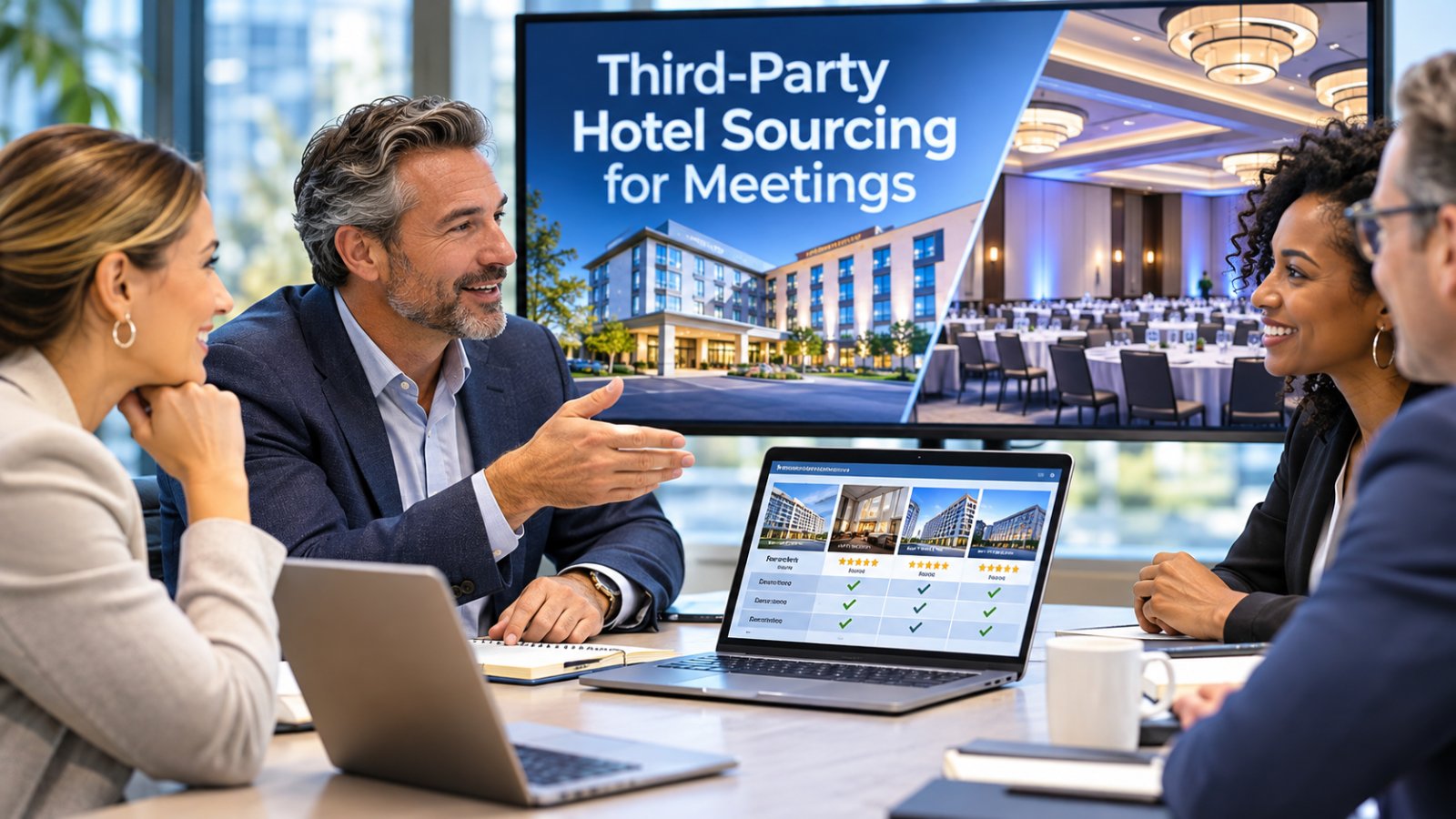
Third-party hotel sourcing for meetings is when an outside specialist handles your hotel search, rate negotiation, and contract on your behalf, and gets paid a commission by the hotel that wins your business rather than by you. For association and corporate meeting planners, that means expert negotiation and attrition protection at no direct cost to the organization. The hotel builds the commission into the same rate it would have offered anyway, so you are not paying extra for help you were previously doing yourself.
If you have ever signed a room block contract and then spent the next eighteen months worried about attrition, you already understand why this model exists. Below is how it actually works, what a real sourcing partner does for you, and how to tell a credible one from a lead broker.
How the hotel-paid commission model actually works
Hotels have always paid commission to the people who bring them group business. Travel agencies have earned it for decades. Group sourcing works the same way. When a hotel wins your meeting, it pays the sourcing partner a commission, most commonly a percentage of the actualized room revenue, meaning rooms your group actually uses and pays for. Note the word actualized. A good partner is paid on rooms consumed, which aligns their interest with yours: they want the block to fill, not just to be signed.
Here is the part planners miss. That commission is not a surcharge added to your rate. It is part of the hotel's cost of sale, the same budget line the hotel uses to fund its own sales team and marketing. When you source direct, the hotel keeps that margin. When you use a sourcing partner, the hotel pays it out. Your negotiated rate is driven by the market, your pattern, and your leverage, not by whether a commission is involved.
The practical takeaway: using a third party does not raise your rate. What it changes is who is sitting on your side of the table reading the contract.
Free Hotel Contract Review: before you sign anything, book a free contract review with Sagen Global. Hotels pay Sagen's commission, so there's no cost to your event.
What a sourcing partner actually handles
The value is not the search. Anyone can send an RFP to ten hotels. The value is in what happens after the proposals come back, which is where most planners are negotiating clauses they have never seen before against a sales team that writes them every day.
A real sourcing partner handles the full lifecycle:
- Market read and sourcing strategy. Which cities and properties fit your pattern, your peak room nights, and your budget, and where your dates collide with citywide events that spike rates and shrink availability.
- RFP and proposal management. Writing the request so hotels bid on the same terms, then normalizing the responses so you are comparing real total cost, not just a headline rate.
- Rate negotiation. Not only the room rate, but resort fees, parking, internet, and the concessions that quietly fund your program: comp rooms, suite upgrades, rebates, and reduced deposits.
- Attrition and cancellation clauses. The two clauses that cause the most financial pain. More on these below.
- Contract execution and management. Tracking the block, managing the cutoff date, watching the pickup, and handling the reconciliation so your final folio matches what was actually agreed.
On attrition: this is the clause that lets the hotel charge you for rooms you blocked but did not fill. The mistake planners make is accepting a flat attrition percentage with no cumulative measurement and no credit for walk-in or extend-stay rooms your attendees book outside the block. The smarter play is to negotiate attrition measured against the cumulative block rather than night by night, to secure credit for rooms picked up outside the block, and to tie the review date to a realistic read on registration. A night-by-night test with no offsets is how a group that nearly fills its block still owes money.
On cancellation: the damages a hotel can claim typically step up the closer you get to arrival. A flat percentage with no sliding scale, or no mitigation language requiring the hotel to resell the space, exposes you to a penalty that does not reflect the hotel's actual loss. These are the terms a sourcing partner negotiates before you sign, not after something goes wrong.
This end-to-end management is the core of what Sagen does for meetings and conventions. See our Conference and Convention Sourcing approach for how the full program is run.
IATA accreditation: a credibility marker worth checking
Anyone can call themselves a hotel sourcing company. One concrete way to separate an established agency from a lead broker is IATA accreditation. IATA, the International Air Transport Association, maintains a numbering and accreditation system used across the travel industry. An IATA number is one signal that a firm is a recognized travel entity that hotels and suppliers transact with as a professional agency, not a middleman reselling your contact information.
It is not the only thing that matters, and it does not replace references or operator experience. But it is a quick, checkable credential. When you are evaluating any third party that will sit between you and your hotel contract, ask whether they hold IATA accreditation, how long they have operated, and whether they have actually sat on the hotel operations side. The last one matters more than most planners realize. A partner who has run a hotel's rooms division knows exactly which concessions cost the hotel nothing and which ones the general manager will fight, and that knowledge is what moves a negotiation.
Direct sourcing versus a third-party partner
Here is the honest comparison planners actually weigh:
- Cost to you: Direct sourcing is "free" only in that you absorb the labor and the risk. A third-party partner is paid by the hotel, so there is no direct fee, and the rate is not inflated to cover it.
- Negotiating leverage: You negotiate one event. A sourcing partner negotiates many, which gives them standing with hotels and a working knowledge of what terms are genuinely available in a given market.
- Contract risk: On your own, you sign the attrition and cancellation terms you were handed. A partner negotiates them down and manages the block so you do not trigger them.
- Your time: RFPs, proposal comparisons, and folio reconciliation are hours you are not spending on the program itself.
The same model applies beyond conventions. Multi-week training cohorts and long workforce deployments carry their own lodging risk, and the hotel-paid structure works there too. If your program is a recurring training schedule, our Technical Training Housing page covers how extended stays are sourced and managed.
Frequently asked questions
Does third-party hotel sourcing cost the planner anything?
No. A third-party sourcing partner is paid a commission by the hotel that wins your business, funded from the hotel's existing cost of sale. It is not added to your rate, so there is no direct cost to your organization for the sourcing, negotiation, and contract work.
Will using a third party make my hotel rate higher?
No. The commission comes out of the hotel's sales budget, the same line it uses to pay its own sales team. Your negotiated rate is driven by the market, your room-night pattern, and your leverage, not by whether a sourcing partner is involved. A skilled partner usually improves the overall deal through better concessions and safer clauses.
What is the most important thing a sourcing partner negotiates in a hotel contract?
The attrition and cancellation clauses. Attrition determines what you owe for unfilled rooms, and cancellation determines your penalty if the event changes. Negotiating cumulative attrition measurement, credit for rooms booked outside the block, and a reasonable sliding cancellation scale with resale mitigation language protects you from the penalties that cause the most financial damage.
Why does IATA accreditation matter when choosing a hotel sourcing company?
IATA accreditation is a checkable credential showing the firm is a recognized travel agency that suppliers transact with professionally, rather than a broker reselling your information. It is one credibility signal to verify alongside operator experience, references, and how the firm actually manages your block after the contract is signed.
How far in advance should I start sourcing a large meeting or convention?
As early as you can confirm your dates and approximate peak room nights. Large events contract years out, and the strongest hotel packages, best rates, and most favorable clauses go to the groups that engage first, especially in tight or citywide markets where availability disappears quickly.