
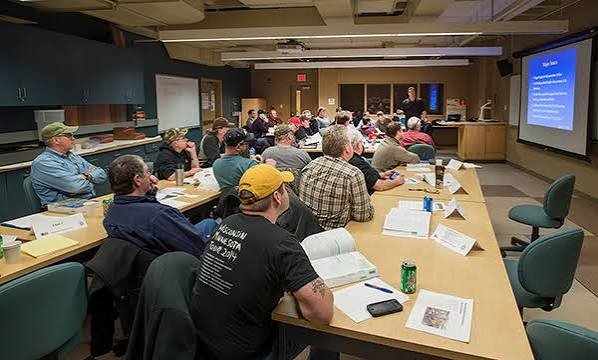
Booking hotels cohort by cohort for a rotating training program almost always costs more than a managed extended-stay agreement covering the same room nights. The transient rate on the booking screen hides rate volatility, duplicated administrative labor, reconciliation errors, and the loss of every negotiating advantage that volume normally buys. Run the same class through the same market twelve or twenty times a year and book each session separately, and you pay retail every time and absorb the risk every time.
Why rotating training cohorts are not ordinary travel
A training program that cycles groups through a location on a schedule is not transient travel. It is a forecastable, recurring block of room nights. The distinction matters because hotels price risk. When a revenue manager cannot see your future demand, every reservation gets priced as if the property may never see you again. That is the transient rate, and it is the most expensive way to buy a bed.
The moment your demand becomes visible and committed, the conversation changes. A property planning its year wants base business it can count on. Predictable midweek occupancy from a training rotation is exactly the kind of demand a revenue manager will discount to secure, because it fills rooms on nights that would otherwise sit empty. Book ad-hoc, and you hand that leverage back to the hotel and get nothing for it.
The costs nobody puts on the invoice
The damage from ad-hoc booking rarely shows up as a single line item. It is distributed across departments and buried in rates that look reasonable in isolation. Here is where it actually lives.
- Rate exposure on every session. Each cohort books into whatever the market is charging that week. A citywide convention, a sports event, or peak season lands during one of your sessions and you pay the spike with no protection. Across a year of sessions, those peaks average into a real premium over a negotiated flat rate.
- Duplicated administrative labor. Someone researches properties, compares rates, makes reservations, handles changes, and chases confirmations for every single cohort. Multiply the hours by the number of sessions. That labor is a cost even when it never appears on a hotel bill.
- No extended-stay pricing. Training stays often run a week or longer, which is exactly the length that qualifies for extended-stay economics. Ad-hoc nightly bookings almost never capture that, so you pay nightly transient rates for stays that should be priced weekly.
- Reconciliation chaos. Dozens or hundreds of individual folios arrive with inconsistent charges, incidentals mixed into room charges, and no common billing structure. Reconciling them against policy is slow, error-prone, and often skipped, which means overcharges go unnoticed.
- No consequences for bad service. Book one cohort at a time, and a property that delivers a poor experience faces no risk of losing future business, because you never committed future business. A program relationship gives you recourse.
The reconciliation problem is worse than it looks
Individual folios are where money quietly leaks. A parking charge that should have been waived, an incidental that should have gone to the traveler, a rate that does not match what was quoted. On one folio it is a rounding error. Across every cohort for a year, it is a pattern, and it is only visible when billing runs through a single consolidated structure that a trained eye reviews. Ad-hoc booking guarantees you never see the pattern.
The smarter play: one program covering the full rotation
The fix is to stop treating each cohort as a new procurement event and start treating the entire rotation as one program. That means forecasting your annual room nights, taking them to market as committed volume, and negotiating a single agreement that covers every session.
Done properly, a managed extended-stay program for a training rotation delivers several things ad-hoc booking cannot:
- A negotiated flat rate that holds across sessions, so a citywide event during one of your weeks does not blow the budget.
- Extended-stay economics priced to the true length of stay rather than nightly transient rates.
- Rate protection language in the contract so the property cannot quietly move you off the agreed rate when demand tightens.
- Consolidated, consistent billing that can actually be reconciled against policy.
- A single point of accountability for changes, no-shows, and service issues across the whole year.
Watch the attrition and cancellation terms
Rotating cohorts change size. Someone drops out, a session gets rescheduled, a class runs smaller than planned. If the agreement is written with rigid attrition and cancellation clauses, that natural variability becomes a penalty machine. The right program is built with the flexibility a rotating schedule needs: reasonable attrition allowances, sensible cutoff windows, and the ability to flex the block as enrollment firms up. This is where the difference between a generic block and a program negotiated by someone who has sat on the hotel side of the table shows up in real money.
Per diem is not a lodging strategy
Many organizations default to a per diem cap and call it done. Per diem controls what you reimburse. It does nothing to secure supply, protect rates, or consolidate billing. In a tight or remote market, the per diem may not even cover the going rate, which pushes cohorts into whatever they can find and shifts the problem onto the travelers. A negotiated program does the opposite: it fixes the rate below the volatility, so per diem becomes a formality rather than a fight. Per diem versus negotiated rates is not a close call for repeating volume.
When to consolidate
If any of the following describe your situation, ad-hoc booking is costing you more than a program would:
- You run the same training in the same market more than a few times a year.
- Typical stays run five nights or longer.
- Staff time goes into researching and booking each cohort separately.
- Folios arrive inconsistent and reconciliation is painful or skipped.
- A busy market week has already forced a cohort into a rate spike.
The threshold is lower than most buyers assume. It is not about huge volume. It is about predictability. Even a modest but repeating pattern is enough to convert ad-hoc exposure into a negotiated, managed program.
Frequently asked questions
Is it cheaper to book a group block or individual rooms for training cohorts?
For a predictable, repeating training program, a negotiated block or extended-stay agreement is almost always cheaper than individual ad-hoc bookings. Individual reservations pay transient rates with no protection against market spikes and no extended-stay pricing, while a program locks a flat rate across sessions and captures weekly-stay economics.
What is the difference between per diem and a negotiated hotel rate?
Per diem is a reimbursement cap that controls what an organization pays back to a traveler. A negotiated rate is a price secured with a hotel in advance based on committed volume. Per diem does nothing to guarantee supply, protect against rate spikes, or consolidate billing, so for repeating cohorts a negotiated program is the stronger tool.
How do attrition clauses affect rotating training programs?
Attrition clauses charge you when you fill fewer rooms than committed. Because cohort sizes naturally vary, rigid attrition terms can trigger penalties on nearly every session. A program built for rotating cohorts uses realistic attrition allowances and flexible cutoff windows so normal enrollment changes do not create charges.
How many training sessions justify a managed lodging program?
There is no fixed number, because the driver is predictability rather than volume. If you run the same training in the same market on a recurring schedule and stays run several nights, the room nights are already forecastable enough to negotiate as one program instead of booking each session at retail.